What Is a Hair Transplant & How Does It Work?
A hair transplant procedure from Bosley is the proven, permanent solution to genetic hair loss.

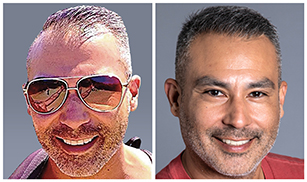 Before After
 Benefits of Hair Transplant Procedures
There are many benefits that come with a well-performed hair transplant procedure, like the ones performed by the hair restoration specialists at Bosley.
The greatest benefit is that it’s your own real, growing hair that you can wash, cut and do whatever you want with.
Another advantage is that hair transplants offer natural-looking results because the hair comes from your own head, and has the right texture and color.
A hair transplant is also a permanent treatment. This means you don’t have to worry about if it will fall out again, because it won’t.
A hair transplant is a low-maintenance option. You care for the transplants in the same way you would the rest of your hair.
Most patients typically only need one procedure but depending on hair restoration goals, future loss of native hair, and the number of grafts received, patients can opt for future procedures.
Do Hair Transplants Work?
This is one of the most common questions we receive from our patients. The short answer is yes, hair transplants work. But you may wonder: why are hair transplants so successful? Thanks to Dr. Norman Orentriech’s concept of Donor Dominance, we have a better understanding of why hair tissue taken from donor sites successfully regenerates new hair at the recipient site. Based on transplanted tissue leading to the growth of healthy hairs, Dr. Orentriech concluded that the physical traits of hair follicles from the donor area were dominant over the physical traits of the scalp tissue at the recipient site.
Additionally, the Donor Dominance concept revealed interesting information about the role of Dihydrotestosterone (DHT) in hair transplants. DHT is a hormone that binds hair tissue’s cellular receptors but over time, high levels of DHT can lead to hair loss in certain people. Generally, hair follicles from donor sites are resistant to DHT when transplanted to recipient sites — no matter where on the scalp the tissue is transplanted. Donor Dominance demonstrates that despite an equal amount of DHT in hair tissue, transplanted hair successfully grows in recipient sites, making hair transplants the most effective and the only permanent solution for hair loss.
Years of research have since been done and in fact, all confirm that hair transplant procedures are proven as a safe and permanent solution for restoring your hair. The National Institutes of Health (NIH) states that the average survival rate of hair grafts is now 90% to 100% when performed by a qualified physician and team. For most people, new growth will be noticeable approximately 3 months after a hair transplant procedure, but it can take up to 12 months to see full results.
Who Is a Good Candidate for a Hair Transplant?
A hair transplant tends to be a good treatment option for individuals with significant hair loss and/or people who have tried other types of hair growth treatments without achieving the results that they desire.
Hair density can also play a role in determining whether you’re a good candidate for a hair transplant, as you need to have enough hair at the donor site to allow for the transplant procedure.
Candidates should be in good overall health to receive a hair transplant. Because the procedure is considered surgery, it might not be an appropriate option for people who have autoimmune issues, uncontrolled diabetes or hypertension, or any other serious medical conditions. It is also not the right choice for women who are pregnant or have recently given birth.
To find out whether you’re a good candidate for a hair transplant procedure, schedule a free consultation to discuss your hair loss pattern, restoration goals, and medical history with an experienced Bosley Physician.
Getting a Hair Transplant: How Does It Work?
Anybody considering this procedure has one all-important question: how does a hair transplant work? In its most basic form, a hair transplant takes hair from one place and moves it to another that’s lacking hair coverage. There are different two types of hair transplant procedures, depending on the type of hair loss you have and your treatment goals.
Follicular Unit Excision (FUE)
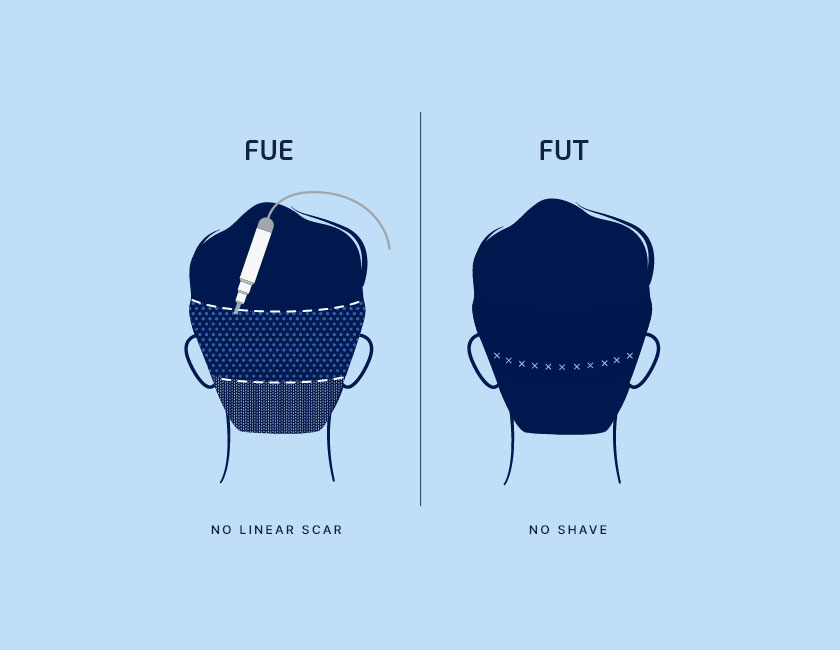
How is a hair transplant done with follicular unit excision? The Bosley FUE is a minimally invasive hair transplantation technique in which follicular unit grafts (containing 1 to 4 hair follicles) are individually removed from the patient’s donor area and then individually transplanted to the recipient area. Bosley’s FUE restoration technique creates a hairline that looks completely natural.
Follicular Unit Excision offers a variety of benefits, including the following:
- Virtually undetectable donor area (no linear scar)
- Faster recovery than other transplant options
- Less discomfort than other transplant options
- More affordable than some other, ongoing treatments
- Latest and most advanced technology in the field
For those worried about scarring, FUE is the best option. Because the procedure does not require stitches and removes grafts one at a time, it does not leave a visible linear scar. FUE uses the latest advanced technology and automated devices, making FUE an exciting option for those facing hair loss and who want an effective and permanent solution.
Follicular Unit Transplantation (FUT)
The Bosley FUT involves removing all the grafts as a group from the back of the head, from which the donor hair follicles are extracted. The follicles are then individually transplanted to the recipient areas. Depending on the size and shape of the donor area and the demand for grafts, FUT may be the preferred method of graft extraction.
FUT also has important benefits for those seeking effective hair restoration techniques. These benefits include:
- More affordable surgery
- Shorter operation time
- Ability to harvest larger quantity of grafts
- No need to shave the back of your head
An FUT may be the right choice for people who need to treat a larger area of thinning or hair loss. The surgeon removes a strip of tissue at one time from the donor area, containing all of the follicles to be transplanted, which can result in better-quality grafts.
FUE vs. FUT Hair Transplants
If you’re just starting your research into hair transplantation, you’re probably wondering about the difference between an FUE and an FUT. While these procedures are similar, and both offer completely natural-looking results, there are some key differences to consider.
What is a Hair Transplant Like for the Patient?
As you can see, the exact procedure varies between FUT and FUE transplants. However, the patient experience before, during and after the treatment is fairly similar. The process starts with a free consultation, during which you’ll discuss your established hair loss pattern, restoration goals, and medical history with a Bosley Physician.
Prior to the procedure, hair will be trimmed from the donor site(s) to facilitate removal of hair follicles or grafts. Local anesthesia is administered to numb the donor area while grafts are removed.
Once removed, hair follicles are prepared for placement by our highly-specialized team. During this time, you can sit back and relax with a book or your favorite TV show. The follicles are then strategically placed to match your hairline for a natural-looking result.
After the procedure, you’ll be provided with a personalized aftercare plan. In some FUT cases, you may be asked to return the next day for professional hair washing and an inspection of the donor and recipient site(s). This one-day outpatient procedure is quick and easy, and in most cases, you’ll be able to return to work the next day.
Additional Hair Transplant Solutions

Eyebrow Restoration
Eyebrow restoration involves taking brow-like hair follicles from your head and transplanting them into the thin, patchy areas of your eyebrows.
BioGraft™
(FUE with Xtrands+)
BioGraft combines Hair Club’s Xtrands+ with Bosley’s Follicular Unit Extraction (FUE) to give you a full head of great-looking hair.
FAQs
What Causes Hair Loss?
In men, the most common cause of hair loss is an excess of DHT hormones. Dihydrotestosterone (DHT) can cause hair follicles to shrink and lead to male pattern baldness. Male pattern hair loss is often genetic, so check with your family to determine whether other men are experiencing male pattern hair loss.
For women, aging and hormonal changes during menopause can cause hair loss. Additionally, tight hairstyles can lead to hair loss in a condition called traction alopecia. Other causes of hair loss for both men and women include trauma, dietary issues, underlying medical concerns, infections, and even an abnormal immune system.
Are Hair Plugs the Same As a Hair Transplant?
Hair plugs are a type of hair transplant from the past, dating back to the 1950s. Today, it is considered an outdated procedure and is no longer performed by reputable physicians thanks to new and improved industry standards, techniques, and technology. But you may be curious: how do hair plugs work and why were they phased out? A hair plug was a small, circular graft that was removed and transplanted. The transplantation of these circular hair plugs often resulted in unnatural-looking hairlines and patchy restoration that resembled doll’s hair.
So how do hair transplants work today in comparison to the hair plugs of the past? Thanks to modern technology, the hair transplants available today are much more advanced and offer more natural-looking results than traditional hair plugs. While both methods remove hair follicles from your head and add them to the areas where you’re experiencing hair loss, a modern hair transplant does it with far better results. This is because modern hair transplants use individual follicular unit grafts as opposed to the larger grafts used in hair plugs. The large “bunches” of grafts often resulted in unnatural-looking hairlines, unsightly patches, and even gaps of missing hair. An FUT or FUE does not leave patches or gaps and helps the hair grow in a more natural way.
What is a Hair Transplant’s Average Cost?
Hair transplant cost is one of the most common questions we come across with new patients and for good reason. Many of our patients state that the results are priceless, but of course, we know that’s not true. While there is no straightforward answer that can be provided online, we can tell you that the cost of a hair transplant procedure averages $10K, but can range from $8K to $18K. The cost depends on the number of grafts you need to achieve your hair restoration goals.
At Bosley, we make available several different payment options, including hair transplant financing. When you schedule a consultation, one of our experts can help you determine the cost for your specific goals.
How Do I Prepare for a Hair Transplant?
It is important to properly prepare for your hair transplant so that you have the best chance of getting the results you want. During your consultation, you’ll be asked about any medications you take, including hair restoration medications. Your physician may recommend that you stop taking blood thinners and supplements before the procedure.
You should also avoid spending too much time in direct sunlight for a few weeks before your surgery and wearing a head covering when outside to avoid burning your scalp. Begin performing scalp massages every day for at least ten minutes. This can help increase blood flow, circulation and the elasticity of your scalp, making it easier to extract the follicles and implant them.
What Can I Expect During Recovery?
So, what is a hair transplant’s average recovery time? The recovery or healing period after a hair transplant will vary from patient to patient. Some people return to work the very next day, others take a bit longer. You will want to refrain from strenuous activities and keep physical activity to a minimum for several weeks. It’s important that you follow aftercare instructions exactly as your Bosley Physician recommends.
During the first few days, you may experience a bit of redness or swelling. To reduce any symptoms, it can help to sleep with your head elevated. You will want to take it easy as much as possible for the first couple of days after surgery. To help the healing process, you should avoid prolonged exposure to direct sunlight and high-impact exercise for at least one week after the procedure.
In terms of maintenance and care, you should not wash your hair for at least three days after your hair transplant procedure. If you had an FUT transplant, you may be asked to come back the next day for a professional hair washing. It’s a good idea to keep your scalp hydrated, so drink lots of water. You can also use a spray bottle with saline to keep the area moist.
After about three days, you can begin to wash your scalp gently. We will help you choose the right shampoo for this process and provide any additional instructions. After two weeks, you can return to your normal hair care routine. During this time, the shafts of the transplanted hair may begin to fall out. That’s normal, as it leads to new hair growth.
You may need to schedule follow-up appointments for inspections of the donor and recipient sites. You should begin seeing results within a few months, with full growth being realized by 12 months.

Looking for Answers?
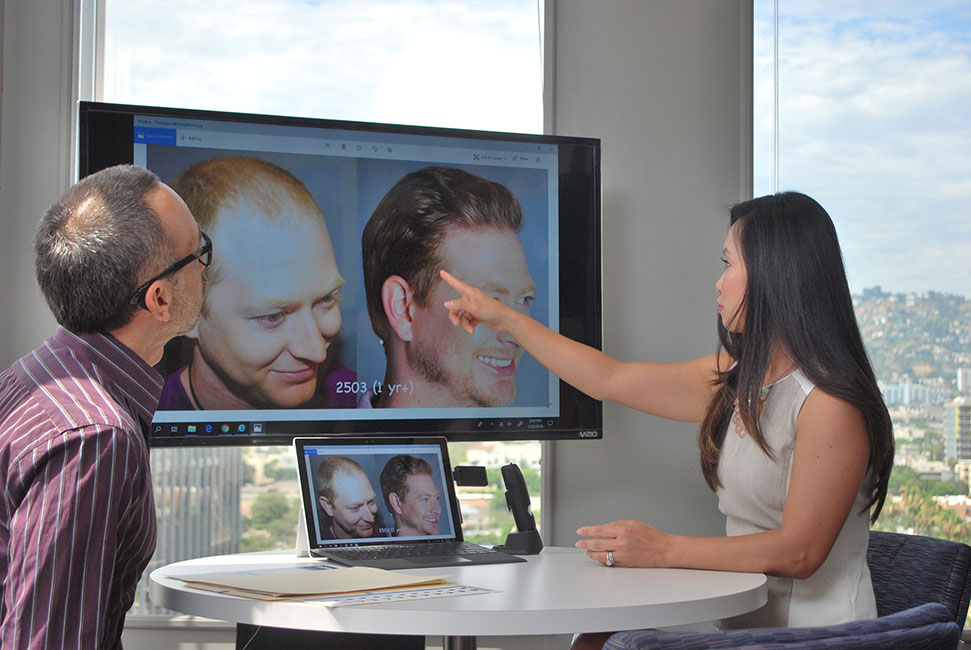
Everyone’s situation is unique. Our hair restoration specialists are ready to answer all of your questions. Let us help you determine the right solution for you.